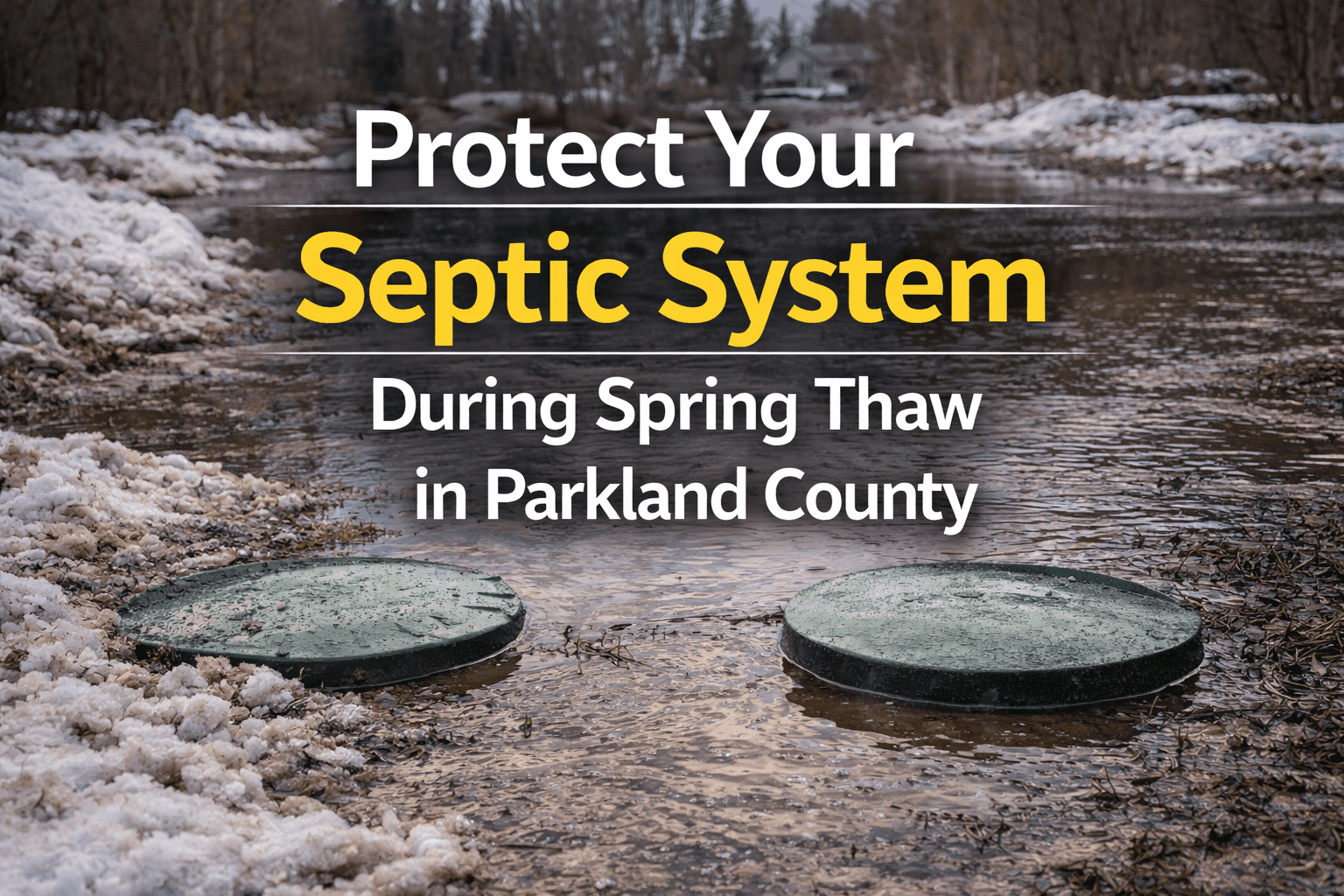
Protect Your Septic System During Spring Thaw in Parkland County
Spring thaw can overwhelm septic fields on acreages. Learn why pooling water is a problem and simple steps to protect your septic system during snowmelt.
Spring thaw can overwhelm septic fields on acreages. Learn why pooling water is a problem and simple steps to protect your septic system during snowmelt.
Warm weather and rain can cause rapid snowmelt across Parkland County. While it’s a welcome sign of spring, this sudden thaw can create serious problems for acreage septic systems.
If you notice water pooling on or near your septic field, it’s important to act early. Excess surface water can overwhelm the system and lead to damage, backups, or health concerns.
A septic field is designed to slowly disperse treated wastewater into the surrounding soil. When the soil becomes saturated from snowmelt or rain, it can no longer absorb or treat wastewater properly.
Pooling water can lead to:
System overload that reduces treatment effectiveness
Damage to the disposal field and internal components
Increased risk of untreated wastewater reaching the surface
Health and environmental concerns for people and animals
Managing surface water during a thaw is critical to keeping your septic system functioning properly.
If you notice water pooling near your septic field, there are a few practical steps that can help reduce stress on the system.
Clear snow from the field
Removing snow allows the ground to thaw and dry more quickly. Clear paths that encourage water to flow away from the field and avoid damaging any system components.
Create drainage paths
Shallow channels in snow or ice can help guide meltwater away from the septic area, reducing surface pooling.
Check for obstructions
Ice buildup, debris, or compacted snow can block natural drainage paths. Clearing these obstructions helps restore proper water flow.
Redirect downspouts and runoff
Ensure roof downspouts and surface runoff are not directed toward the septic field. Redirecting water away reduces soil saturation.
Monitor conditions regularly
During periods of heavy melt or rain, check the field frequently. Early signs of pooling are easier and less expensive to address.
Preventative maintenance plays a major role in septic system longevity. Proper grading, drainage planning, and regular inspections help protect systems year-round, especially during seasonal transitions.
Understanding how water moves across your property is just as important as the septic system itself.
If pooling persists or worsens, professional evaluation may be required. Ongoing saturation can indicate drainage or grading issues that need to be corrected to prevent long-term damage.
Early intervention can often prevent costly repairs or system replacement.
Spring thaw puts extra stress on septic systems, but proactive drainage management can make a big difference.
By monitoring conditions, redirecting water, and addressing issues early, acreage owners can protect their septic fields and avoid unnecessary damage. Proper planning and maintenance help ensure your septic system continues to function safely and effectively through every season.