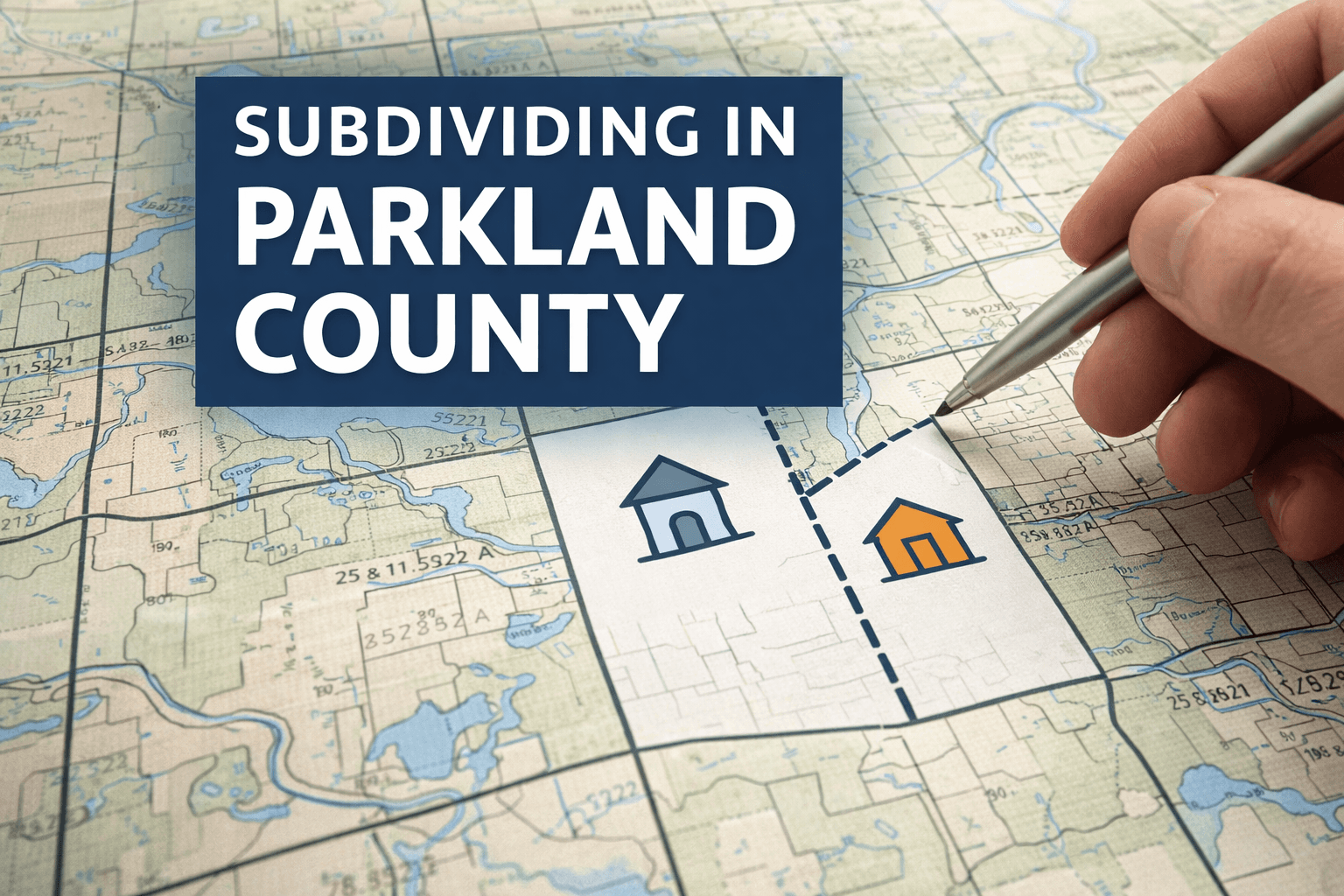
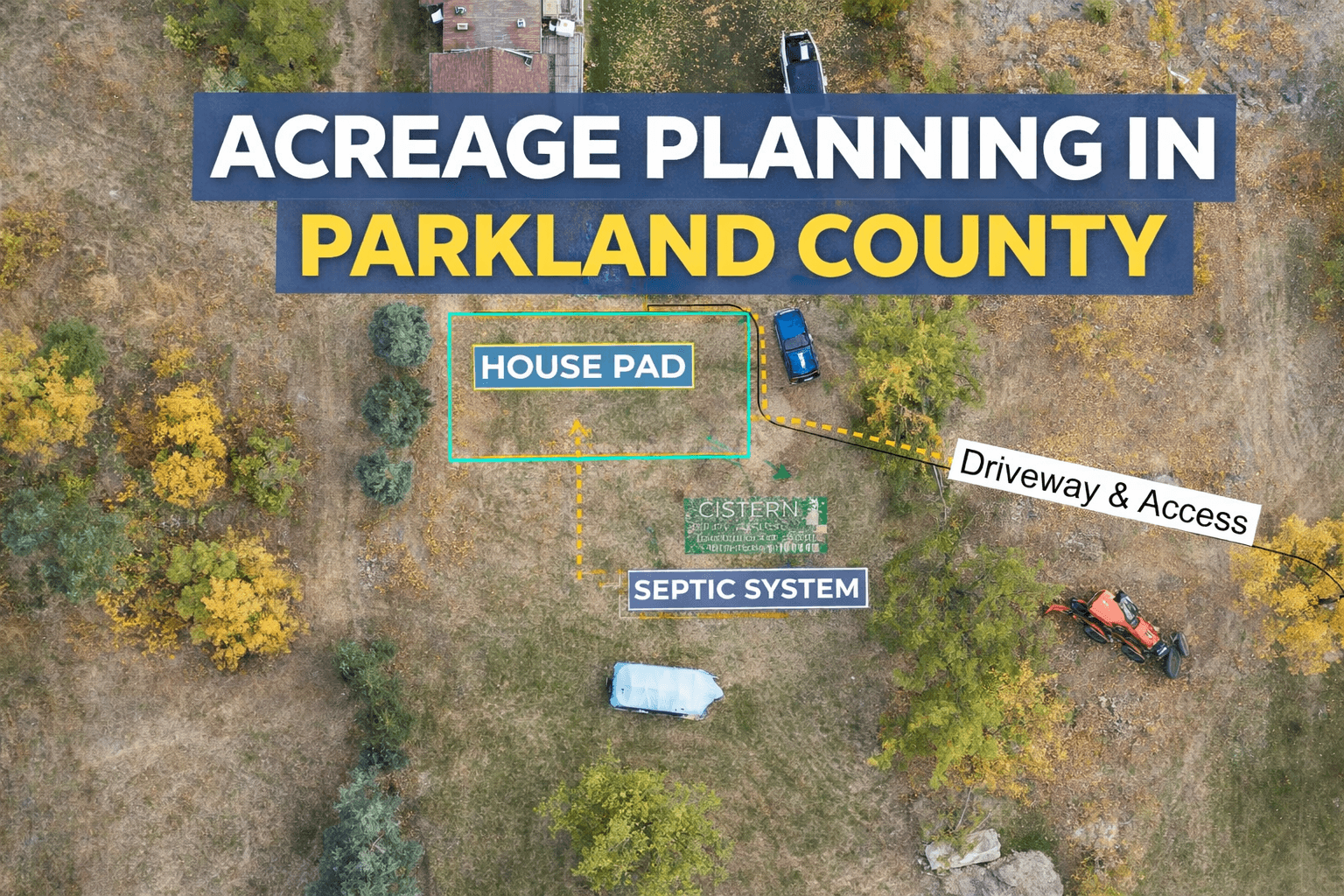
Subdividing Land in Parkland County: The Big Picture
A simple 10,000-foot overview of the subdivision process in Parkland County — what to expect, where people get stuck, and how to plan your next steps.
A simple 10,000-foot overview of the subdivision process in Parkland County — what to expect, where people get stuck, and how to plan your next steps.
Subdividing land in Parkland County is something more property owners are looking into every year. Some people want to create a second lot for family, some want to sell off a portion of their land, and others are planning ahead for future building or retirement.
What sounds simple at first can turn into a longer process if the steps aren’t clear. Subdivision isn’t just drawing a line on a map — it’s a formal approval process that involves planning, access, and County requirements.
If you’re thinking about subdividing, having a high-level understanding of the process helps you avoid delays, extra costs, and unnecessary frustration.
Most subdivision projects run into issues because the goal isn’t clearly defined from the start.
Before anything happens, it helps to know:
What size of parcel you want to create
What the new parcel will be used for
Whether it will be sold, kept in the family, or developed later
The County reviews every application based on zoning, intended use, and how the parcel fits into the surrounding area. Getting the direction right upfront makes everything else easier.
A lot of people assume the first step is hiring a surveyor.
In reality, the process usually begins with a County review stage where zoning, parcel size rules, and access requirements start to shape what is realistically possible.
This is where you find out what the County will expect before you spend money building the wrong plan.
It’s also where some projects get slowed down — not because they can’t happen, but because the application was started without confirming the basics first.
Once the County knows what you’re applying for, the subdivision needs to be shown properly on paper.
That’s where the Tentative Plan comes in.
This plan is typically created by an Alberta Land Surveyor and gives the County a clear snapshot of the property and the proposed lot split. It helps them see important details like:
Proposed parcel size and shape
Existing buildings and setbacks
Wells and septic locations
Road access and approaches
Easements, pipelines, or rights-of-way
Natural land features that may affect the layout
This stage is where good planning saves time. A clean layout that makes sense usually moves smoother than one that creates new problems.
Not every subdivision needs extra reports, but some do.
Depending on the property and where it’s located, the County may require additional supporting items before they approve a subdivision.
This can include things like environmental considerations, servicing information, or confirming site suitability.
Most people don’t expect this part — and that’s why subdivision timelines vary so much from one property to the next.
A simple project might move quickly, while a property with constraints can require more steps.
Even for a straightforward application, subdivision usually involves multiple parties and moving pieces.
You may deal with:
Parkland County planning staff
A surveyor
Utility or servicing considerations
Access and driveway planning
Conditions that need to be completed before registration
Here is what a smooth subdivision process usually depends on:
Clear goal and intended use for the new parcel
A workable layout that fits the land and access
Good coordination between the County and surveyor
Subdivision is less about speed and more about making sure each step is done in the right order.
Subdividing in Parkland County can be a great option for property owners — but it’s not something you want to guess your way through.
The process is manageable when it’s planned properly, and most problems happen when people rush into it without confirming requirements first.
If you’re considering subdividing your land and want to understand your options, it’s worth having a quick conversation before moving forward.
A short call early on can save a lot of time, avoid expensive corrections, and make sure you’re starting in the right direction.