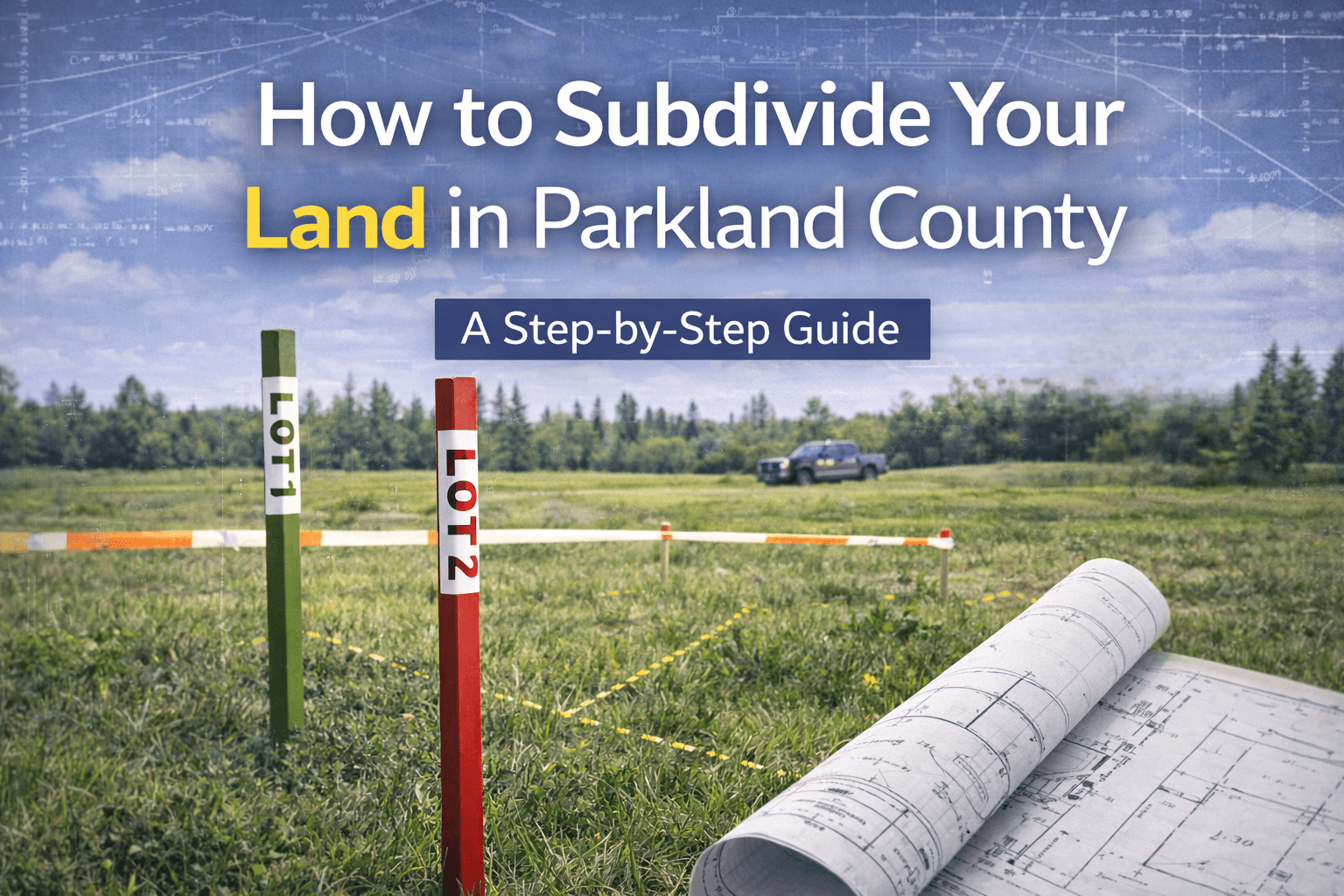
How to Subdivide Your Land in Parkland County: A Step-by-Step Guide
A step-by-step breakdown of the Parkland County subdivision process, including planning requirements, approvals, fees, and how to avoid common delays.
A step-by-step breakdown of the Parkland County subdivision process, including planning requirements, approvals, fees, and how to avoid common delays.
Subdividing land in Parkland County is something more property owners are looking into every year. Some want to create a second lot for family, some plan to sell off a portion of their land, and others are thinking ahead for future development or retirement.
What sounds simple at first can turn into a long and frustrating process if the steps aren’t clearly understood. Subdivision isn’t just drawing a line on a map — it’s a formal approval process involving County planners, surveyors, and multiple review stages.
Having a clear understanding of how the process works helps avoid delays, unexpected costs, and unnecessary revisions.
Before submitting a subdivision application, Parkland County requires a pre-consultation with a County Planner. This step helps identify potential conflicts early and ensures your proposal aligns with County policies and land use bylaws.
You’ll need:
The legal description of your property
A basic sketch showing the proposed subdivision
During this stage, the Planner may flag issues related to zoning, access, servicing, or environmental constraints. They may also recommend involving an Alberta Land Surveyor or other consultants before moving forward.
Your property’s zoning determines whether subdivision is permitted and how many lots can be created.
The Land Use Bylaw outlines:
Permitted and discretionary uses
Minimum parcel sizes
Subdivision limitations
Area-specific regulations
Confirming zoning early prevents investing time and money into a layout that doesn’t meet County requirements.
Subdivision applications are submitted through the PLANit Parkland system. A complete application typically includes:
A Tentative Plan prepared by an Alberta Land Surveyor
Property dimensions and proposed parcel boundaries
Existing buildings, wells, septic systems, and access points
Easements, pipelines, and oil or gas wells
A current title search
Any required supporting studies
Payment of applicable fees
Submitting a complete and accurate application at this stage helps prevent delays later in the process.
Once submitted, the County reviews the application for completeness within 14 days.
Incomplete applications are returned with a deficiency list
Complete applications move forward to circulation
This step is purely administrative but critical for keeping timelines on track.
During circulation, the application is reviewed by County departments and external agencies.
This review period typically lasts 21 days and may generate comments or conditions related to:
Access and road requirements
Servicing and utilities
Environmental considerations
Adjustments to the tentative plan may be required at this stage.
After circulation, the Subdivision Authority issues a decision:
Conditional Approval, requiring specific conditions to be met before registration
Refusal, which can be appealed within 30 days
Conditions often relate to access, servicing, or legal agreements and must be completed before final approval.
If infrastructure is involved, a Development Agreement with the County may be required. This outlines responsibilities for road construction, utilities, stormwater management, and securities.
Some areas may also require off-site levies to support regional infrastructure improvements.
Once all conditions are met:
The subdivision plan is endorsed
The Alberta Land Surveyor registers the plan with Land Titles
The new parcel(s) are legally created
This completes the subdivision process.
Larger or multi-parcel subdivisions may require a Conceptual Scheme. This document shows how the subdivision fits into future development, access planning, servicing, and environmental considerations.
Key considerations include:
Maximum number of lots based on zoning
Development Agreements for infrastructure
Environmental or geotechnical requirements
Payment of all fees and levies before registration
Appeal options if an application is refused
The subdivision process can be complex, especially for first-time applicants. Prairie Acre Developments helps property owners navigate the process by:
Assisting with pre-consultation preparation
Coordinating with surveyors and consultants
Reviewing layouts before submission
Managing conditions and development requirements
Proper planning upfront often saves months of delays and costly revisions.
Subdividing land in Parkland County is achievable, but it’s not something you want to guess your way through. Understanding the process and planning each step carefully makes the difference between a smooth approval and a stalled application.
With the right guidance, subdivision can be a valuable and rewarding step for your property’s future.