Why a Proper Pad Is the Foundation of Every Acreage Project
A properly built pad is critical for garages, shops, and outbuildings on acreages. Learn what makes a good pad and why planning it first matters.
A properly built pad is critical for garages, shops, and outbuildings on acreages. Learn what makes a good pad and why planning it first matters.
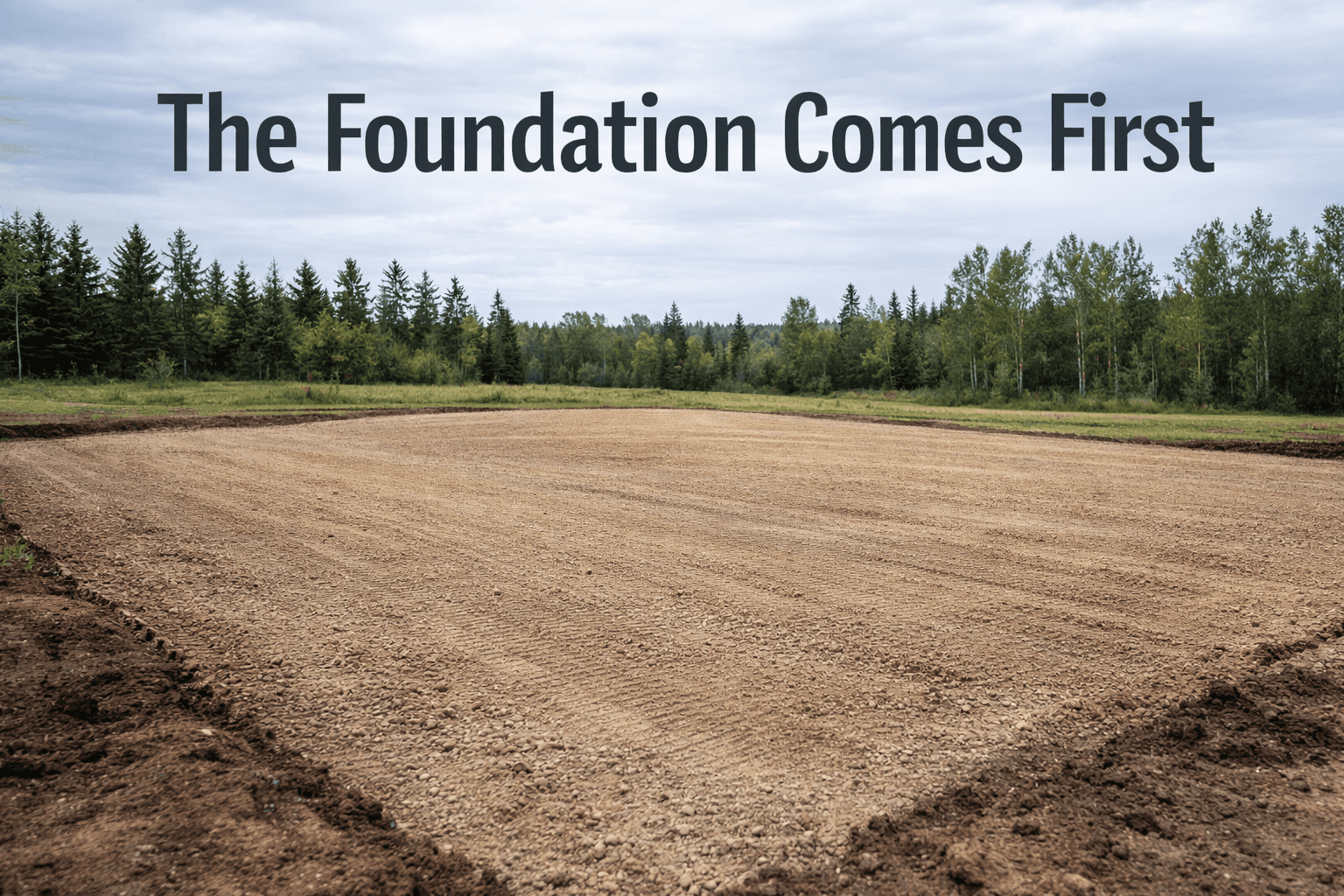
Every acreage project starts with the same foundation — the pad.
Whether you’re building a garage, workshop, greenhouse, cabin, or shelter, the quality of the pad determines how well everything above it performs. While it’s not the most visible part of a project, it’s often the most important.
A properly built pad provides stability, manages water, and protects structures from long-term issues like frost heave, cracking, or settlement. Understanding what goes into a good pad helps ensure your project starts on solid ground.
A pad functions as the base for the entire structure. If it’s uneven, poorly compacted, or built on unsuitable material, problems tend to show up quickly.
On acreages, conditions like clay soils, frost-prone ground, and uneven terrain increase the importance of proper preparation. Once a building is in place, correcting pad-related issues becomes far more expensive and disruptive.
A well-built pad helps ensure:
Structural stability
Proper drainage
Resistance to frost movement
Long-term durability of the structure
Pad requirements vary depending on how the structure will be used. Some of the most common pad types include:
Garage and shop pads
These need to be level, well-compacted, and capable of supporting vehicles, equipment, and future concrete slabs.
Cabin and bunkhouse pads
Seasonal or permanent buildings require stable subgrade preparation to prevent settlement and shifting over time.
Greenhouse pads
Proper drainage is critical to prevent water pooling and freeze-thaw damage in Alberta’s climate.
Weather shelter and livestock pads
Elevated, well-drained pads help reduce erosion, mud buildup, and water damage.
Utility and storage pads
Grain bins, sheds, and equipment storage all rely on a stable base to remain level and functional.
Building a pad involves much more than pushing dirt into place.
A properly constructed pad typically includes:
Excavation down to suitable, stable subgrade
Placement of appropriate materials based on the structure
Compacted lifts to prevent settlement
Proper grading to direct water away
Use of geotextile where soil conditions require it
Accurate leveling to ensure the pad is ready for construction
Each site is different, which is why pad design should match both the structure and the ground conditions.
Across Parkland County and rural Alberta, soil and weather conditions can vary significantly from one property to the next. Clay soils, frost depth, and drainage patterns all play a role in how a pad should be built.
Using accurate grading and elevation data helps ensure pads are built to the correct height and slope, reducing future issues related to water and frost.
Most acreage projects require a properly prepared pad before construction begins.
Common examples include:
Detached garages or shops
Modular buildings or tiny homes
Concrete slabs for future structures
Livestock shelters or lean-tos
Storage sheds or grain bins
Firepit areas or patios
Large kennels or outdoor enclosures
If you’re unsure whether your project needs a pad or what type is appropriate, an on-site assessment can clarify the best approach.
Pad construction is one of the easiest stages to get right — and one of the most costly to fix later if rushed.
Starting with proper planning helps:
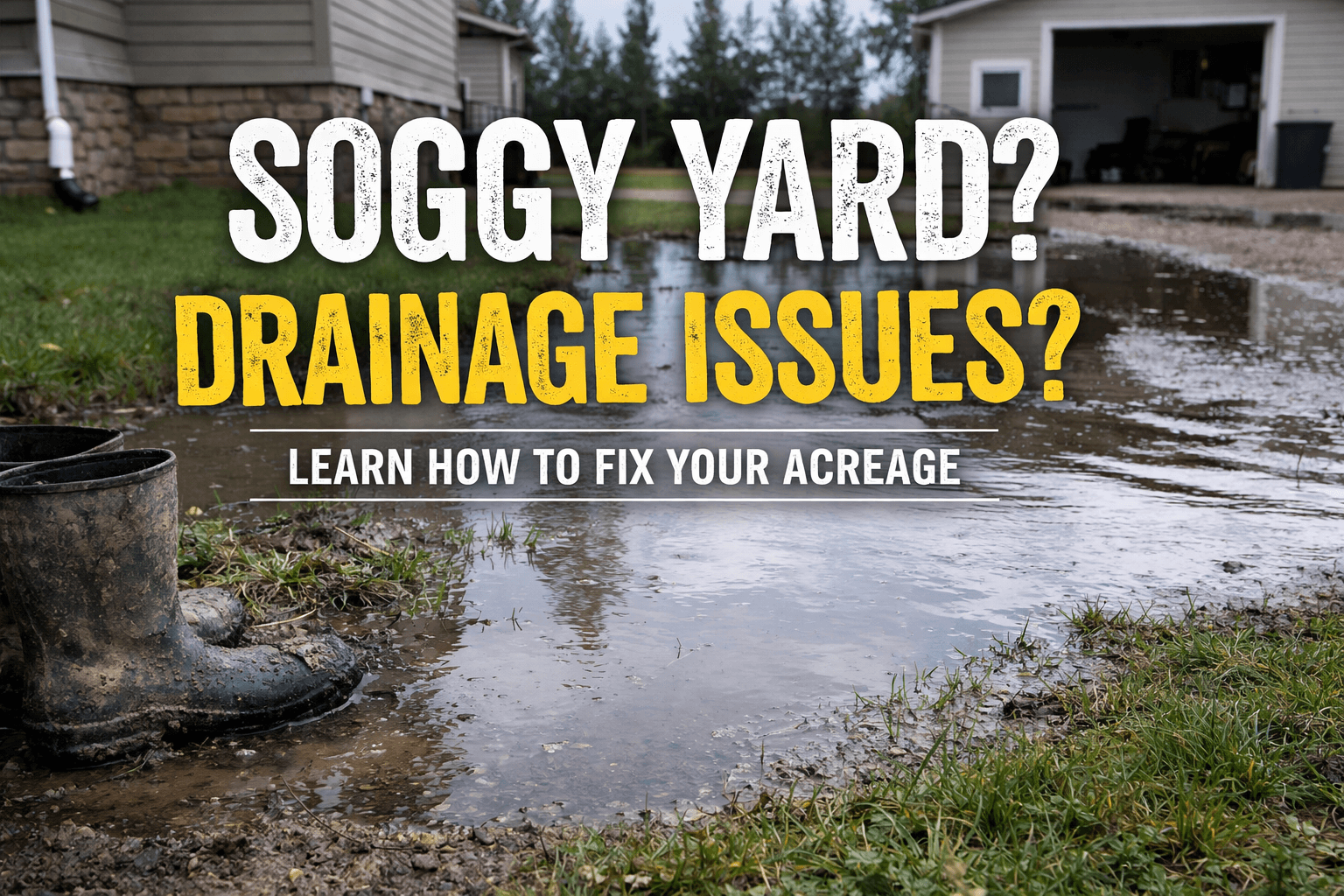
Avoid drainage issues
Prevent frost-related movement
Ensure future construction stays on schedule
Reduce long-term maintenance and repairs
A successful acreage project starts below ground.
A properly built pad creates a stable, long-lasting base that protects your investment and ensures everything built on top performs as it should. While it may not be the most visible part of a project, it’s one of the most important decisions you’ll make.