Introduction
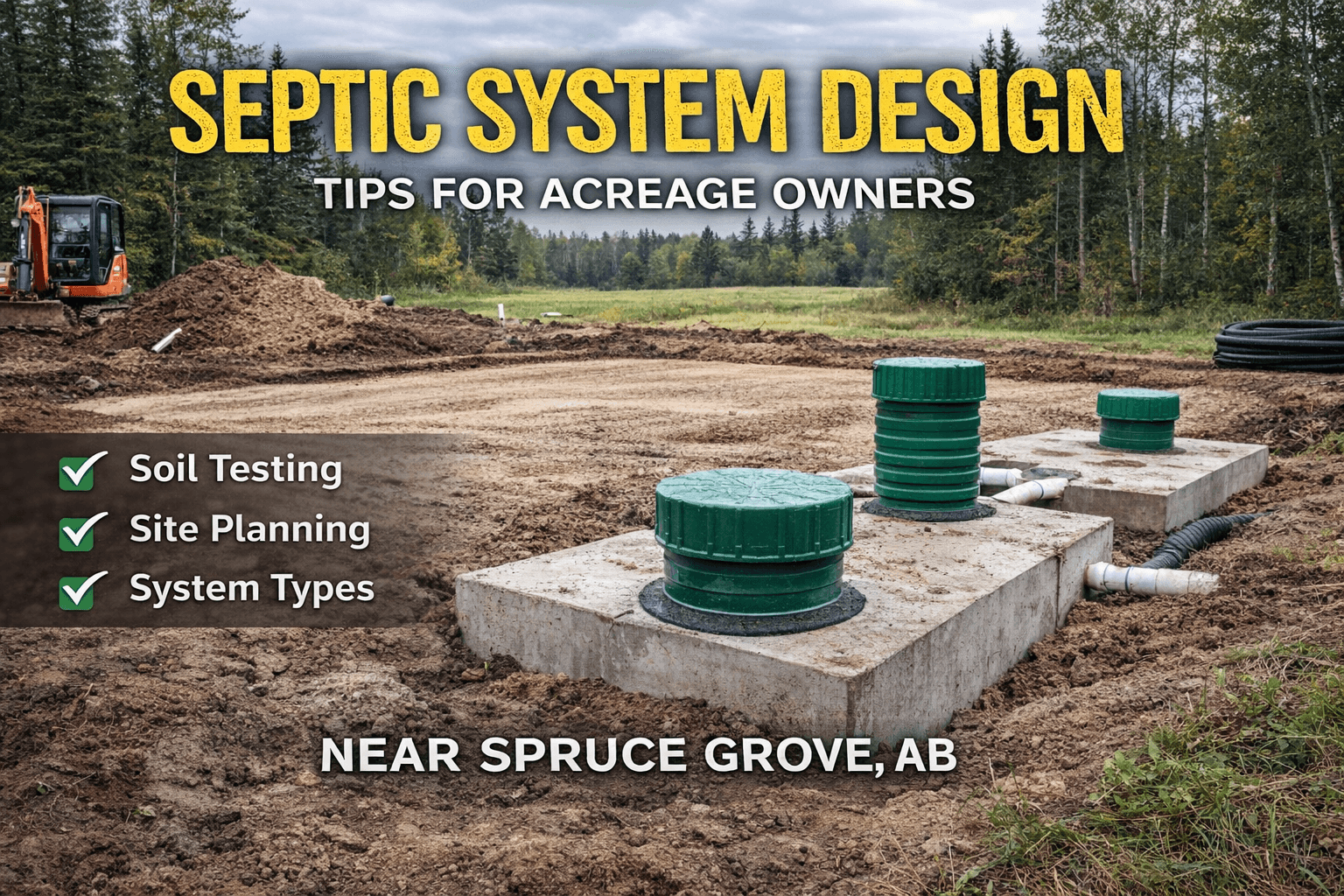
If you’re planning a septic system for an acreage or rural property near Spruce Grove, one of the most important steps happens long before installation begins — septic system design.
Many property owners focus on finding a septic installer, but the performance, lifespan, and cost of a septic system are largely determined during the design phase. A properly designed system accounts for soil conditions, water table depth, property layout, and household usage to ensure long-term reliability and regulatory compliance.
Understanding how septic system design works helps you avoid costly mistakes and ensures your system is built for your specific property.
Why septic system design comes first
A septic system must be designed before excavation or installation can begin. Design ensures the system matches the site conditions and meets provincial and local requirements.
A proper septic design considers:
Soil type and drainage characteristics
Depth to groundwater and seasonal water table
Location of buildings, wells, and property boundaries
Slopes and natural drainage patterns
Household size and expected water usage
Without this information, installation pricing is largely guesswork. Completing the design first allows for accurate planning and realistic cost estimates.
Soil testing plays a critical role
Soil conditions are one of the most important factors in septic system design. Different soils absorb and treat wastewater at different rates, and choosing the wrong system for the soil can lead to premature failure.
Soil testing helps determine:
Soil texture, such as sand, silt, clay, or mixed soils
Permeability and absorption rates
Seasonal high water table conditions
These results guide the selection of the appropriate septic system and treatment method for the property.
How soil conditions affect septic system design
Every property is different, and soil conditions directly influence which septic system will work properly.
Sandy or highly permeable soils
These soils drain quickly, which can allow wastewater to pass through too fast for proper treatment. Designs may require larger treatment areas or pressure distribution to ensure adequate filtration.
Clay or poorly draining soils
Clay soils absorb water slowly and can cause pooling or system overload. In these cases, raised or mounded systems are often required to provide proper treatment and separation.
High water table or shallow bedrock
When groundwater is close to the surface, separation distances become critical. Raised systems may be needed to reduce contamination risk and meet regulatory requirements.
Mixed soil conditions
Many acreages have varying soil types, which may require a customized or hybrid system design.
Because of these variations, septic systems are not one-size-fits-all. The right design ensures efficient operation and long-term performance.
Why professional septic system design matters
A professionally prepared septic design provides clarity before installation begins.
A complete design process typically includes:
Site evaluation and layout planning
Soil sampling and laboratory testing
Septic system design that meets current regulations
Documentation required for permits and approvals
Once the design is complete, property owners can use it to obtain accurate installation quotes from multiple contractors, helping compare pricing and avoid unexpected changes during construction.
Understanding septic system costs
One of the most common questions acreage owners ask is how much a septic system will cost.
The reality is that pricing varies widely depending on soil conditions, system type, property layout, and regulatory requirements. Without proper testing and design, any estimate is uncertain.
Investing in septic system design first provides:
More accurate installation pricing
Reduced risk of redesign or rework
Confidence that the system meets code requirements
A clear plan before construction begins
Conclusion
A successful septic system starts with proper design.
For acreage owners near Spruce Grove, septic system design ensures the system is suited to the land, compliant with regulations, and built to last. Taking the time to understand site conditions and complete soil testing early helps prevent costly issues and delays later.
If you’re planning a new septic system or replacing an existing one, starting with design is the most reliable way to move forward with confidence.