Choosing the Right Septic System for Your Acreage in Parkland County
Soil conditions, water table depth, and site layout determine which septic system works best on an acreage. Learn how to choose the right option in Parkland County.
Soil conditions, water table depth, and site layout determine which septic system works best on an acreage. Learn how to choose the right option in Parkland County.
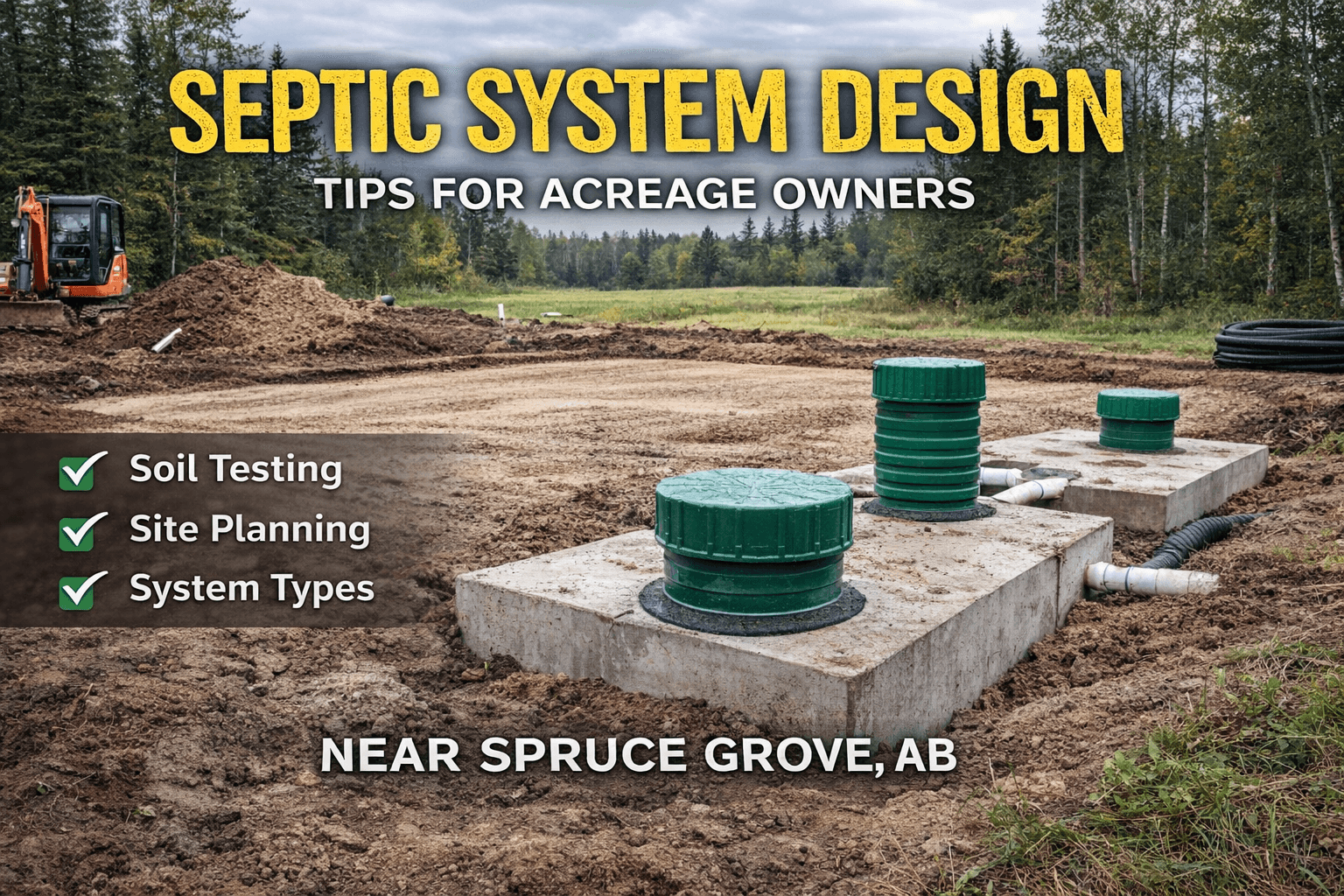
Choosing the right septic system is one of the most important decisions when developing an acreage in Parkland County. Soil conditions, groundwater levels, and property layout all play a role in determining which system will function properly long term.
Septic systems are not just about waste disposal. The right system protects groundwater, prevents drainage issues, and ensures your property remains functional and compliant for decades. Understanding your options helps avoid costly failures and redesigns later.
No two properties are the same, and septic systems must be matched to site conditions.
Choosing the wrong system can lead to:
Groundwater contamination
Poor drainage and surface pooling
Premature system failure
Expensive repairs or replacement
Regulatory non-compliance
The best septic system is the one designed specifically for your land, based on verified soil and site information.
There are three primary septic system types used on rural properties in Parkland County. Each is designed for specific site conditions.
A treatment field, often called a drain field or leach field, is the most common septic system type.
Best suited for:
Sites that meet required soil depth and permeability regulations
Properties with low groundwater tables
Open areas with suitable natural soils
Not suitable for:
High water table conditions
Restrictive or shallow soils
Sites that do not meet regulatory soil requirements
How it works:
Wastewater flows from the septic tank into a network of trenches where effluent is evenly distributed. Soil and naturally occurring bacteria filter contaminants before treated water returns safely to the environment.
If soil depth or permeability requirements are not met, an alternative system is required.
Mound systems are used when natural soil conditions are not suitable for a conventional treatment field.
Best suited for:
High water tables
Clay-heavy or poorly draining soils
Sites with restrictive soil layers
Properties requiring added separation from groundwater
Not suitable for:
Small lots with limited space
Flat areas where surface water may pool around the mound
How it works:
A mound system is constructed above natural ground using layers of sand and gravel. Wastewater is pumped through a pressure distribution system, allowing even treatment before effluent enters the soil below.
Mound systems require more space and maintenance, but they provide reliable treatment where conventional systems would fail.
At-grade systems are typically used on forested properties with an LFH (Leaf, Fibric, Humic) soil layer and require a secondary treatment unit.
Best suited for:
Forested sites with established organic soil layers
Properties where minimal excavation is preferred
Areas where preserving natural soil structure is important
Not suitable for:
Open fields or cleared land
Sites where effluent could migrate outside the designated infiltration area
How it works:
Effluent is treated in a secondary treatment unit before being pressure-distributed over the forest floor. A bark mulch layer helps retain moisture and reduce freezing risk, while organic soil filters the treated wastewater before it reaches groundwater.
At-grade systems require careful design and ongoing maintenance but offer an effective solution for suitable forested sites.
Selecting the right septic system depends entirely on verified site conditions.
In general:
Sites meeting soil depth and permeability requirements are suited for treatment fields
High water tables or restrictive soils require mound systems
Forested properties with LFH soils may be suitable for at-grade systems with treatment units
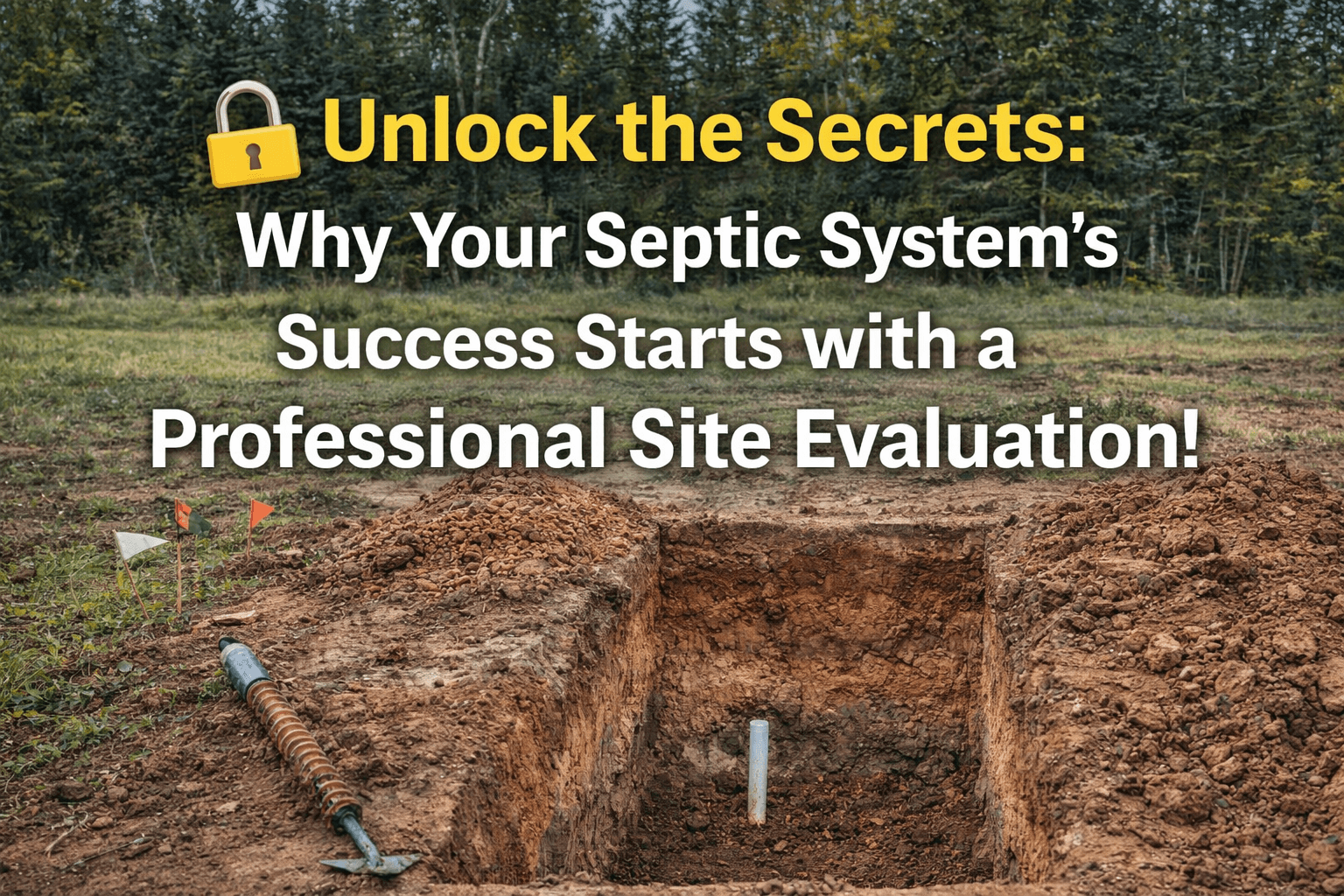
Proper site evaluation and soil testing are essential before making any decisions.
There is no one-size-fits-all septic system for acreages.
The right system depends on soil conditions, groundwater depth, land use, and long-term property plans. Taking the time to understand these factors and choose the appropriate system helps protect your land, reduce future costs, and ensure regulatory compliance.
A properly designed septic system is an investment in the long-term success of your acreage.